Owners of income-producing properties have the opportunity to earn a state income tax credit (capped at $5 million) that is equal to 20 percent of eligible rehabilitation expenses for substantial rehabilitation projects. Substantial rehabilitation projects are defined as projects with eligible expenses that exceed the greater of the adjusted basis value of the structure or $25,000.
Prospective applicants considering submission of a Competitive Commercial application in the upcoming funding round are strongly encouraged to contact tax credit review staff early in the project planning process. Early communication and site visits allows MHT the opportunity to provide useful guidance in identifying potential design issues, site or building challenges as well as providing opportunities for further discussion on how to complete a successful application that meets the project goals and is in keeping with the program requirements. Please contact tax credit review staff at
[email protected] to discuss your project and/or schedule a site visit.
Application Materials
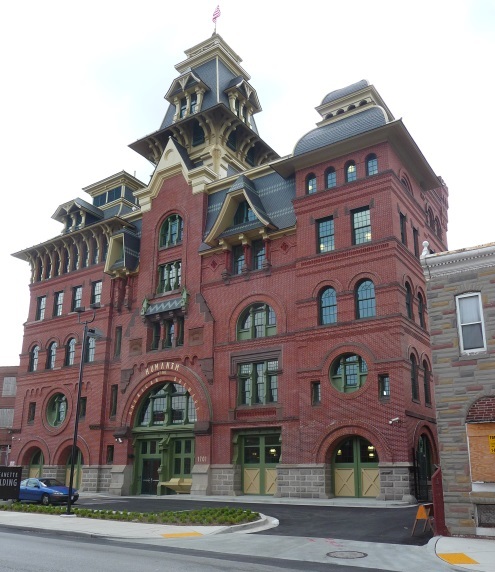 American Brewery.
 Please read the
Competitive Commercial Tax Credit Application Instructions and all supporting materials prior to filling out the application. To download and fill out the actual forms, please read the instructions below.
Downloading fillable PDF application forms
These forms work best with Acrobat Reader 10 and above.
Application Forms
-
Part 1 certifies that a building is a certified historic structure
-
Part 2 certifies that the proposed project meets the requirements of the program
-
Part 3 certifies that the completed project meets the requirements of the program
Associated Forms
Eligibility
To be eligible for the tax credit, a building must:
- Be a certified historic structure, defined as having at least one of the following designations:
- Individually listed in the
National Register of Historic Places
- A contributing resource within a National Register Historic District
- A locally designated structure or contributing resource within a local historic district that MHT determines to be eligible for the National Register
- Located within and certified as contributing to the significance of the Certified Heritage Area
All aspects of the project and application must:
*This requirement is waived if a Federal Part 2 was approved by the National Park Service for the scope of work prior to the state application deadline. However, any work started prior to the State Part 2 approval will not be eligible for the tax credit.
All projects awarded $1,000,000 or higher in tax credits must comply with the state law regarding Corporate Diversity.
- In the FY2021 legislative session, HB1210 was passed by the General Assembly and signed into law by Governor Hogan with an effective date of July 1, 2022.
- This bill requires certain entities that receive greater than or equal to $1,000,000 or more in State benefits to demonstrate that they meet certain corporate diversity requirements through either (1) membership of underrepresented communities in its board or executive leadership, or (2) support for underrepresented communities in its mission.
- To comply with the new law and its implementing regulations, a covered entity must attach either (a) a
Corporate Diversity Addendum formas part of the annual report that it files with the SDAT under Tax-Property § 11-101(d), or (b) an affidavit establishing that it is exempt from the new law's requirements to the Part 3 Certification of Completed Rehabilitation Application. An aggregate tax credit greater than or equal to $1,000,000 cannot be awarded unless the applicant certifies that it meets the new law's requirements or is exempt.
- Four types of entities are expressly exempt from the law’s requirements:
- a sole proprietor;
- a limited liability company owned by a single member;
- a privately held company if at least 75% of the company’s shareholders are family members; and
- an entity that has an annual operating budget or annual sales less than $5,000,000 and does not qualify for a State benefit. Bus. Reg. § 19-106(b); COMAR 24.01.07.03B.
Eligible Work
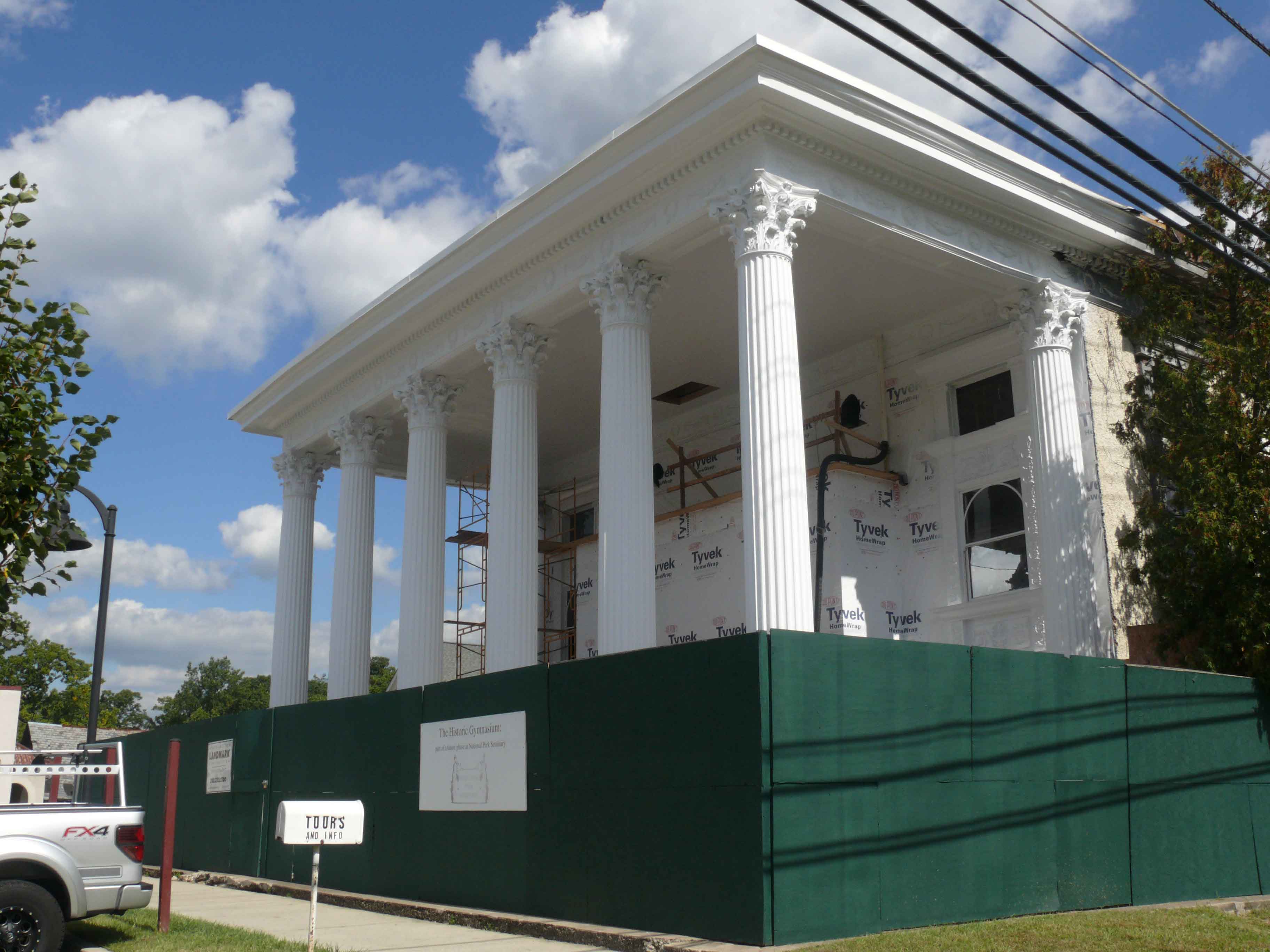 Portico.
 Eligible expenses are chargeable to a capital account and incurred to rehabilitate the structure after the application fee is paid and the Part 2 Application is approved.
Rehabilitation is defined as work that will return a structure to a state of utility through repair or alteration, making possible an efficient use while preserving portions and features of the structure, site and environment that are historically, architecturally or culturally significant.
If you have questions, please contact tax credit staff.
-
Dana Marks Halpert, Preservation Officer, Tax Credits, at 410-697-9551
-
Carey L. Jones, Preservation Officer, Tax Credits, at 410-697-9560
-
Kate Jaffe, Administrator, Preservation Financial Incentives, at 410-697-9537
