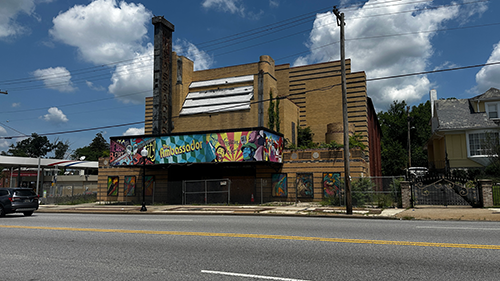
 Ambassador Theater – Liberty Heights Avenue, Baltimore City
Ambassador Theater (Liberty Heights Avenue, Baltimore
City)
$3,750,000 in Tax Credits Awarded
Estimated Total Cost - $15 Million
The Ambassador Theater is one of Baltimore’s finest and most intact examples of Streamline Moderne
architecture and a distinguished work of nationally recognized theater architect John J. Zink. Completed
in 1935, it reflects a pivotal moment in Zink’s career as he shifted from ornate Art Deco to the sleek
modernism that shaped his later theaters. Its streamlined façade—with black brick banding, vitrolite
accents, and cast-stone medallions—retains exceptional integrity, and the interior still reflects
its original layout, including rounded stairs, niches, and plaster grilles. Rehabilitation efforts will
restore character-defining features such as the marquee and vertical blade sign and preserve significant
interior volume and recreating its historic curved walls. The renewed building will be operated by
Ambassador Arts as a cultural hub for theater, education, and the performing arts.
 Buildings 50 & 54 – Crown, Cork, and Seal Highlandtown Plant – Eastern
Avenue, Baltimore City
Buildings 50 & 54 – Crown, Cork, and Seal Highlandtown Plant – Eastern
Avenue, Baltimore City
Buildings 50 & 54 – Crown, Cork, and Seal Highlandtown Plant (Eastern
Avenue, Baltimore City)
$1,752,940.38 in Tax Credits Awarded
Estimated Total Cost - $20 Million
Buildings 50 and 54 (c. 1914-16, 1931) were originally constructed with Building 54 as cork storage and
Building 50 as warehouse space as part of the Crown Cork and Seal Company’s Highlandtown Plant, a
historic factory complex associated with bottlecap making. The overall intent of the project is to
create production space and artist studio space focused on blacksmithing, metalworking, ceramics, and
fire arts.
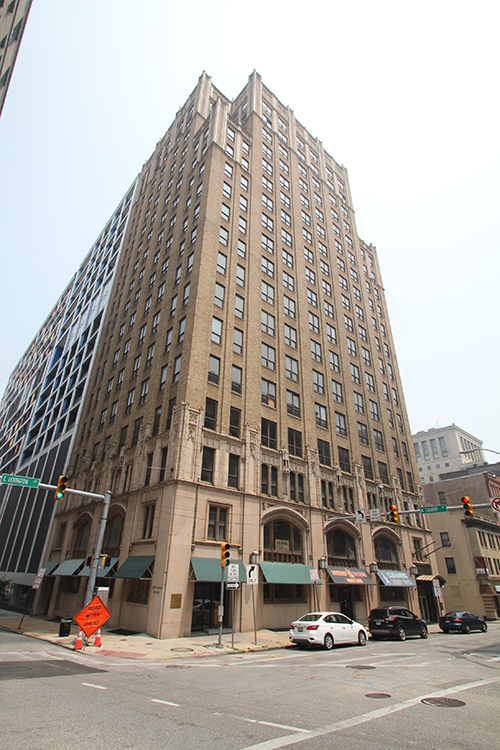 Court Square – East Lexington Street, Baltimore City
Court Square (East Lexington Street, Baltimore
City)
$5,250,000 in Tax Credits Awarded
Estimated Total Cost - $58 Million
The Court Square Office Building is a 17-story Gothic Revival tower in Baltimore’s Business and
Government Historic District. A uniquely ornate style for a high-rise building at the time, it features
a flat roof with crenelated terra cotta pediments with bas relief and other Gothic detailing. It was
purpose-built as a commercial office building in 1927 and was one of the city’s first high-rise office
structures. Now sitting vacant as a result of a fire in 2021, it will be rehabilitated into an extended
stay hotel and restaurant to serve downtown Baltimore.
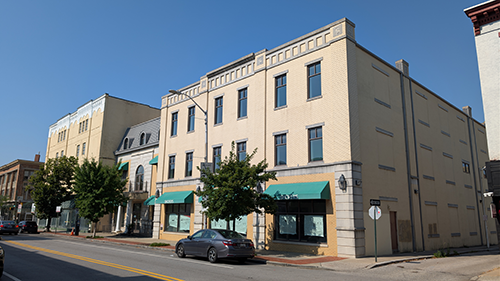 Shofer’s Furniture – South Charles Street, Baltimore City
Shofer’s Furniture (South Charles Street, Baltimore
City)
$3,366,445 in Tax Credits Awarded
Estimated Total Cost - $16.8 Million
The former Shofer’s Furniture showroom building is located in the Federal Hill Historic District. The
building dates to 1886 though its current architectural features date to ca. 1893 when Meyer C. Hecht,
owner of Hecht’s Company Furniture Store, purchased it and added the stylistic elements that are in keeping
of numerous other Hecht’s stores in the area. In the 1930’s Harry W. Shofer purchased the building and ran
it for many years as Shofer’s Furniture showroom and store. The store permanently closed in 2021, and the
building is currently vacant. The proposed project will re-open large window openings and reconfigure the
interior spaces to allow for ground-floor commercial spaces with apartment units above.>
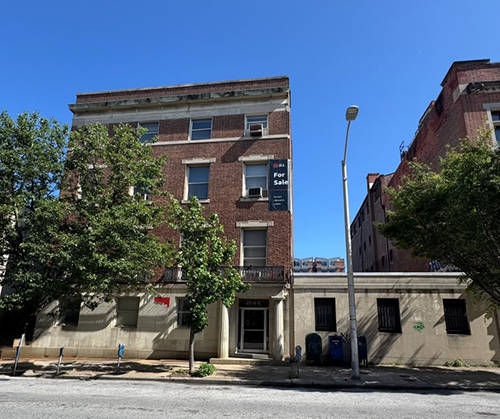 12 West Chase Street – Baltimore City
12 West Chase Street (Baltimore City)
$600,000 in Tax Credits Awarded
Estimated Total Cost - $3 Million
Located in Baltimore’s Mount Vernon Historic District, this Greek Revival townhome was built c. 1890 as
an elaborate single-family home with a doctor’s office and later served as headquarters for the
Independent Order of Odd Fellows’ Sovereign Grand Lodge. Now owned by Native American LifeLines, it
will be transformed into a cultural center for Urban American Indian and Alaskan Native communities
across Maryland, with spaces for a dental suite, mental health counseling, business center, a large
teaching kitchen, and other gathering areas.
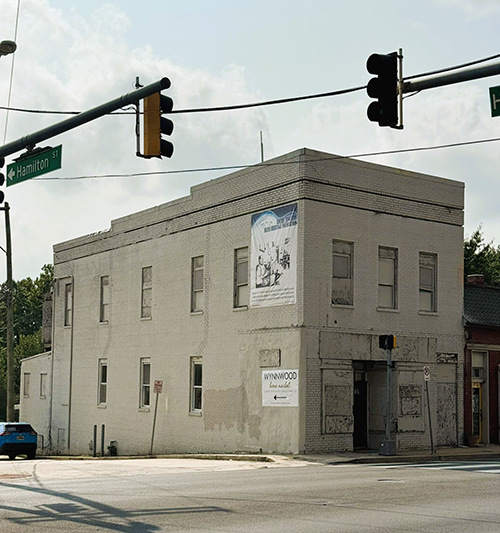 Old Hyattsville Post Office – Baltimore Avenue, Prince George’s County
Old Hyattsville Post Office (Baltimore Avenue, Prince
George’s County)
$149,908.80 in Tax Credits Awarded
Estimated Total Cost - $749,544
Located in the Hyattsville Historic District, the ca. 1925, masonry building formerly housed a post
office and dates to when this section of Hyattsville was rapidly developing along Baltimore Street, a main
commercial corridor in this area. In 1935 the building became a bakery, then a sub shop, and later a
church. The currently vacant building will be rehabilitated with new windows and a storefront system as
well as interior finishes and will contain spaces for two retail tenants.
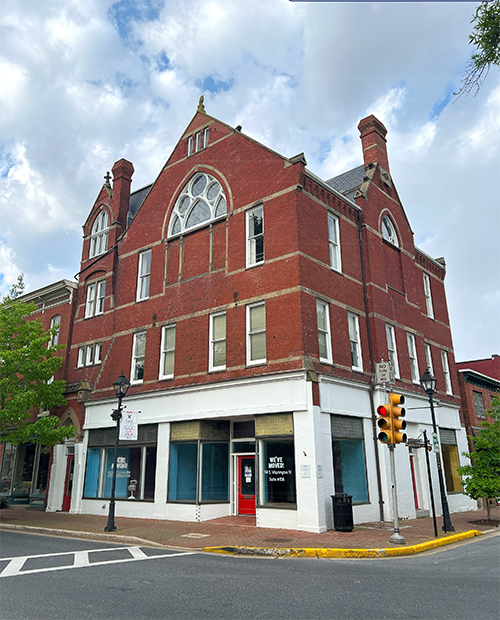 Odd Fellows Hall – South Washington Street, Talbot County
Odd Fellows Hall (South Washington Street, Talbot
County)
$600,000 in Tax Credits Awarded
Estimated Total Cost - $3 Million
This former Meeting Hall for the International Order of Odd Fellows (IOOF) sits prominently on the
corner of Washington and Dover Streets in the Easton Historic District. Eclectically designed and
built in 1879, the building retains a number of IOOF symbols and original decorative features, a
highly intact meeting hall on the fourth floor, and is still known today as Odd Fellows Hall. As
a result of this rehabilitation project, the building will house a folk-art museum for one of the
pre-eminent collections in the United States that includes original pieces of IOOF history.
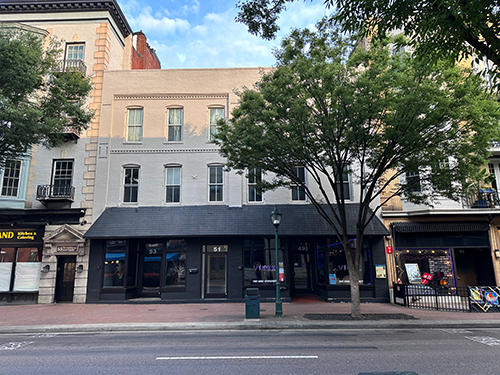 Heist Building – South Potomac Street, Washington County
Heist Building (South Potomac Street, Washington
County)
$308,266.39 in Tax Credits Awarded
Estimated Total Cost - $4 Million
Constructed in 1885, the Heist Building is a three-story brick commercial structure located within both
the Hagerstown Historic District and Hagerstown Commercial Core Historic District. Throughout its history
it has served several commercial uses, as well as a home for the Fraternal Order of the Eagles. The
street-level storefront has undergone significant alterations over time, and the decorative cornice has
been removed. Both features will be restored and reinstated to achieve a more historically appropriate
street presence based on historic documentation. The building will retain its first-floor commercial use
and introduce new apartment units on the second and third floors.
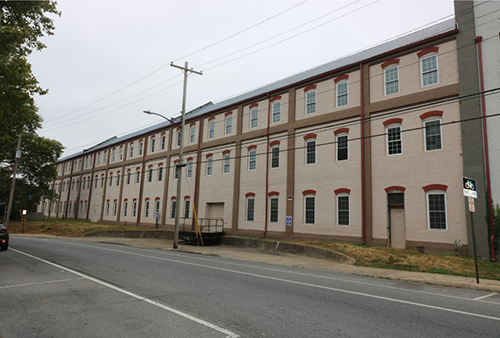 Moller Pipe Organ Co. Building – North Prospect Street, Washington
County
Moller Pipe Organ Co. Building – North Prospect Street, Washington
County
Moller Pipe Organ Co. Building (North Prospect Street,
Washington County)
$5,000,000 in Tax Credits Awarded
Estimated Total Cost - $21.9 Million
The Moller Pipe Organ Company building is a late-19th century industrial factory building that occupies
a large site north of downtown Hagerstown and immediately adjacent to the former Cumberland Valley
Railroad Yards. This evolved industrial building is two- to three-stories in height, masonry construction,
and has a central, expansive three-story high production space with large arched windows with projecting wings
for industrial manufacturing and office spaces. At one point in time the Moller Pipe Organ Company was the
largest producer of pipe organs in the country and was in business on this site for over 100 years.
Currently vacant, the building will be converted into 65 residential units, 55 of which will be affordable
housing.
 Washington Street School – West Washington Street, Washington County
Washington Street School (West Washington Street, Washington
County)
$3,754,748.40 in Tax Credits Awarded
Estimated Total Cost - $18.7 Million
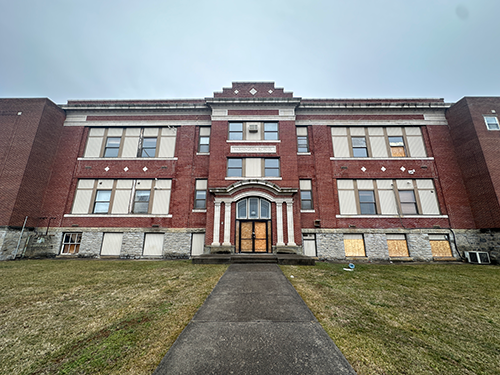
Located approximately one mile northwest of downtown Hagerstown, this large school sits on an elevated rise
in the West End neighborhood. The Washington Street School was constructed in three building campaigns,
starting in 1916 with a three-story Beaux Arts section. In 1941, the Board of Education built an addition
to the school in the form of two wings on either side of the original school building. This was quickly
followed by another addition in 1946 to house a combined gymnasium and auditorium and connector to the original
building. The school closed in 1977 and since has had several different commercial uses though it is currently
mostly vacant. The former school building will be rehabilitated into a senior living facility with eighty-four
independent living units and a memory care facility.
